


بلاگ
Raw MDF or Laminated MDF? A Buying Guide to Help You Choose


MDF (Medium-Density Fiberboard) is an engineered wood product manufactured by compressing fine wood fibers with specialized resins under controlled heat and pressure. The uniform structure of these panels provides greater strength and a smoother surface compared to particleboard; furthermore, they offer superior reliability—in terms of dimensional stability and workability—than natural wood. These characteristics have made MDF a popular choice for cabinetry, interior design, and various wooden structures. If you are currently in the selection phase, exploring the MDF options and pricing at Saco Wood can help you make an informed decision, allowing you to choose a high-quality, cost-effective product that aligns with your project’s specific needs and budget.
The Difference Between Raw MDF and Laminated MDF
Raw MDF is a sheet with no coating, leaving its surface ready for painting, veneering, or the application of custom designs. In contrast, coated MDF (such as melamine, high-gloss, membrane, or LamiGloss) features a pre-finished, durable surface that provides a smooth, uniform appearance for a project.
In terms of price, raw MDF is generally more economical, as it consists solely of the MDF core without the added cost of a surface veneer. Laminated (veneered) MDF commands a higher price due to the application of a surface layer and the associated pressing and bonding processes; it is primarily recommended for projects involving exposed surfaces or interior decoration.
Appearance and Aesthetics: Pre-surfaced (laminated/veneered) boards directly provide the final look of the project and require no additional painting or finishing; in contrast, raw MDF allows for the application of various types of veneers or custom paint colors, making it a flexible option for projects that require specific designs or custom color schemes.
Execution and Installation: Raw MDF requires additional processing—such as sanding, priming, and painting or veneering—which results in a longer execution time. Pre-finished (veneered) MDF allows for faster installation and is ideal for applications requiring a ready-to-use surface, such as kitchen cabinets or visible shelving.
Durability and Resistance: Coatings enhance the resistance of MDF against minor moisture, everyday wear and tear, and scratches. Uncoated (raw) MDF is more vulnerable and performs best in indoor environments where humidity is controlled; however, its durability can be brought to an acceptable level by applying a suitable coating or paint.
The choice between raw and veneered MDF depends on your budget, the nature of the project, aesthetic requirements, and the desired speed of execution. Raw MDF is a flexible option for budget-friendly or custom projects, while veneered MDF is the optimal choice for projects where the finished surface will be visible and rapid completion is a priority. If you are looking to purchase raw or veneered MDF with the best balance of price and quality, visit Saco Wood today to explore our range and select the perfect option for your project.
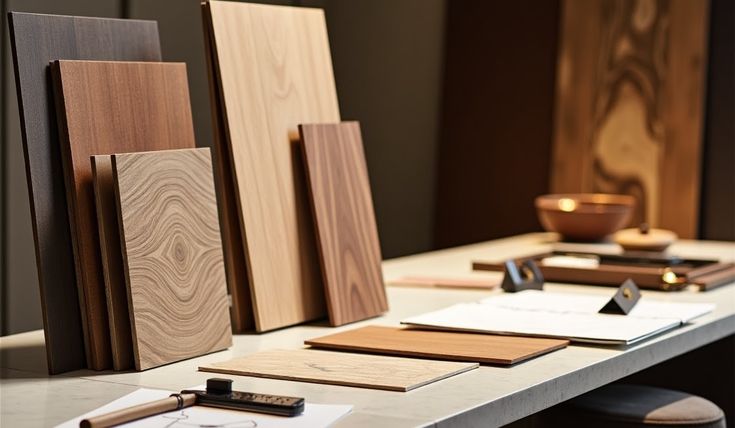
Types of MDF and Choosing the Best One Before Purchase
Evaluating the various types of MDF veneers based on their material is a crucial step before making a purchase. This is because the veneer is not merely an aesthetic element; it directly influences the quality, durability, resistance to moisture and scratches, intended application, and overall cost of the MDF. Each type of veneer—ranging from economical melamine to High-Gloss, Membrane, Poly-Gloss, and Lami-Gloss—possesses distinct characteristics, advantages, and limitations, making them suitable for diverse applications, from cabinetry and interior design to high-end, modern projects.
For this reason, understanding the materials used for surface finishes helps the buyer make an informed and cost-effective choice, taking into account the installation environment, expected usage, design style, and budget. Below, we examine each type of MDF finish individually to make the final decision easier and more precise.
1. Raw MDF (Unfinished MDF)
Raw MDF is a board with no surface coating, making it ideal for those who intend to apply their own preferred veneer or paint. This type of MDF is cost-effective and allows for complete customization of a project. In terms of durability, it performs very well provided it is used in dry environments where humidity is controlled.
Advantages: Flexibility in veneering and painting, affordable price, suitability for precise cutting and machining.
Applications: Cabinet making, interior carcasses, shelving, custom decorative projects.
2. Melamine-faced MDF
MDF surfacing is the most common and cost-effective option, featuring a surface resistant to scratches, dry heat, and everyday wear and tear. With a wide variety of colors and textures—including wood-grain and embossed designs—it is well-suited for most residential and office projects.
Advantages: Affordable, highly durable, diverse range of colors and textures, quick installation.
Applications: Kitchen cabinets, built-in closets, shelving.
3. MDF with High-Gloss Finish
This finish provides a glossy, transparent surface that reflects light, making a space appear both modern and more spacious. Compared to melamine, this type of MDF is more susceptible to scratches and fingerprints; it is typically used for cabinet fronts or wall paneling.
Advantages: Luxurious and modern appearance, light reflection, suitable for modern projects.
Applications: Kitchen cabinets, decorative doors, modern tables, and wardrobes.

4. Membrane-Faced MDF
Membrane surfacing is made of PVC and applied to MDF using a vacuum-pressing technique. It allows for the creation of 3D designs and intricate carvings, while providing complete edge coverage; it is well-suited for classic and neoclassical-style cabinetry.
Advantages: Complete edge coverage, capability for 3D designs, attractive classic appearance.
Applications: Classic-style cabinetry, luxury interior decor, custom projects.
5. Poly Glass / Lemi Glass-Faced MDF
This is an advanced version of high-gloss MDF, coated with acrylic and polymers. It offers exceptional resistance to scratches, moisture, and warping. The higher cost of this type of MDF is justified by its superior durability and high-clarity, glossy finish.
Advantages: High durability, resistance to moisture and scratches, clarity, and a luxurious quality.
Applications: Luxury projects, high-quality cabinetry and shelving, modern interior design.
How can one identify high-quality MDF?
To select high-quality MDF, there are a few key points you should consider before making a purchase:
-
Uniform Edges and Thickness: High-quality MDF sheets feature smooth, consistent edges, with a uniform thickness maintained across the entire sheet. Rough or cracked edges indicate poor core quality or improper pressing.
-
Weight and Density: A sheet with the optimal density is both lightweight and portable, yet possesses sufficient resistance against bending and pressure. Low-quality MDF may be overly light or porous, leading to poor performance in cabinetry and interior decoration projects.
-
Smooth, Even Surface: The surface of the MDF must be uniform and smooth to ensure precision during cutting, veneering, and painting. The presence of depressions, bumps, or scratches on the surface is a sign of inferior quality.
-
Odor and Chemicals: High-quality MDF should not emit a strong or unpleasant odor. A pungent or intense chemical smell may indicate the use of low-grade resins or incomplete processing.
-
Cutting and Screwing Test: When purchasing, you can try cutting or driving a screw into a small sample. High-quality MDF allows for a clean cut—free from chipping—and accommodates screws effectively.

Maintenance and Care of MDF
To extend the service life of MDF and protect it from environmental damage, the sheets must be stored in a dry environment, avoiding direct contact with water or high levels of humidity; even moisture-resistant MDF remains vulnerable to direct water exposure. During handling or installation, avoid subjecting the sheets to impacts or dragging them across hard surfaces. It is advisable to cover the sheets with a soft cloth or plastic sheeting to prevent scratches and preserve their smooth, uniform surface.
Proper weight distribution and the prevention of excessive pressure on the sheets are crucial, as heavy loads can cause MDF to crack or warp. To clean the surface, remove dust and stains using a soft, damp cloth or specialized MDF cleaning products; avoid strong solvents or abrasive agents, which could damage the raw or veneered surface. For veneered sheets, taking care of the edges and the surface enhances resistance to wear, scratches, and moisture, thereby extending the lifespan of cabinetry, decorative elements, and furniture.
What factors does the price of MDF depend on?
The price of MDF is not determined by a single factor; rather, a combination of technical and qualitative characteristics plays a role in establishing its final cost. Understanding these factors will help you make an informed choice when purchasing MDF—one that aligns with both your budget and the specific requirements of your project.
-
Type of MDF Facing: The type of surface finish (such as Melamine, High-Gloss, Membrane, Poly-Gloss, Lami-Gloss, or raw/unfinished) has the greatest impact on price. Generally, the more durable, glossy, and high-quality the finish, the higher the final price of the MDF sheet.
-
MDF Sheet Thickness: Thicker sheets—such as 18mm or 25mm—are more expensive than thinner options, as they require more raw material and offer greater weight and structural strength.
-
MDF Sheet Dimensions: Standard or larger-sized sheets (e.g., 183×366 cm) typically command a higher price. Additionally, custom cutting requirements can increase the final cost.
-
Quality of the MDF Core (Density and Compaction): MDF characterized by high density, uniform fiber distribution, and standardized pressing offers superior resistance to warping, stress during cutting, and external pressure; naturally, such material is more expensive.
-
Quality of Raw Materials and Resins: The use of high-quality wood fibers and standard resins enhances durability, reduces brittleness, and extends the lifespan of MDF sheets—factors that directly influence the price.
-
Resistance Level: MDF sheets with superior resistance to moisture, scratches, abrasion, and pressure (such as moisture-resistant MDF or those with reinforced coatings) command a higher price than standard versions.
-
Manufacturer Brand: Reputable brands typically carry a higher price tag than lesser-known or generic brands, owing to their rigorous quality control, production consistency, and adherence to higher standards.
-
Domestic vs. Imported: Imported MDF is generally more expensive than domestically produced MDF due to shipping costs, customs duties, and often superior manufacturing quality; however, some Iranian brands also offer competitive quality.


