


بلاگ
Particleboard Suitable for Export Markets: What Characteristics Should It Have?

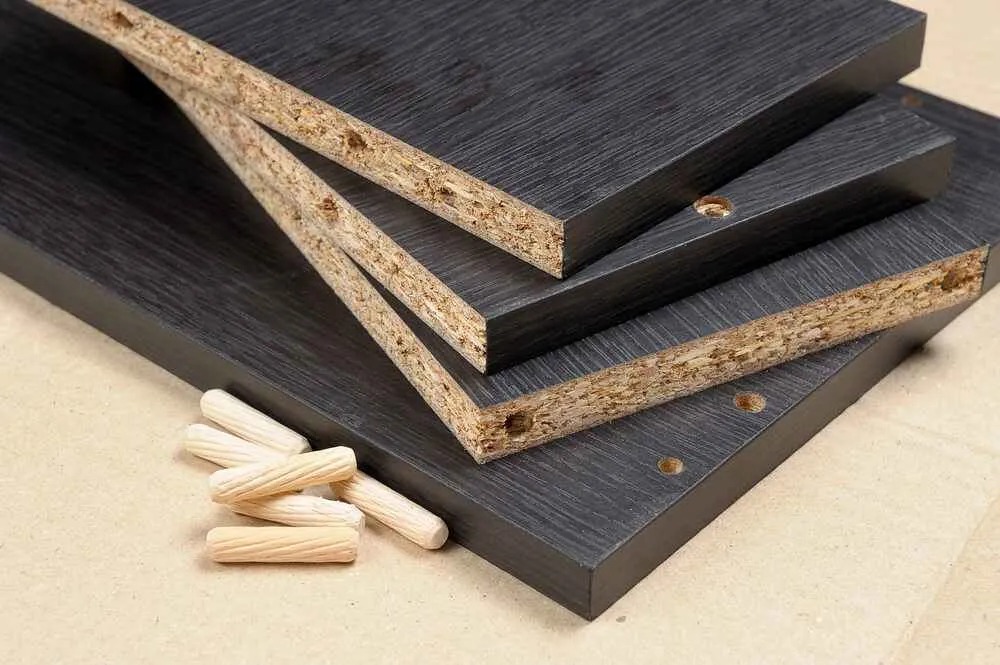
Is every type of particleboard suitable for entry into foreign markets? When selecting particleboard for export, what specific criteria must be considered to avoid issues such as product returns, quality degradation, or a loss of business reputation in the destination market? The reality is that particleboard intended for export differs from standard, domestic-grade products. Factors such as adherence to export standards, density, permissible moisture content, pressing quality, and surface uniformity play a decisive role in its success abroad. Whether you are planning a bulk purchase of particleboard for export or wish to verify its quality before evaluating pricing, this article provides a detailed and practical examination of the essential characteristics required for particleboard destined for foreign markets.
What is export-grade particleboard, and how does it differ from regular particleboard?
To understand the difference, one must first recognize that “export-grade particleboard” is not merely a brand name; rather, it refers to a product manufactured and prepared to meet not only the general specifications of standard particleboard but also the technical requirements of the destination market, stricter quality standards, and the demands of international transport. More precisely, export-grade particleboard must surpass the standards typical for domestic consumption in terms of density, moisture content, structural uniformity, formaldehyde emissions, mechanical strength, and even packaging. This is because even the slightest quality deficiency could cause significant issues during long-haul transit or within the foreign customer’s own production process.
1_ Difference in density and compaction structure
One of the most significant differences lies in the density and the distribution of that density across the layers of the particleboard. In standard particleboard, the density of the core and the surface layers may not be entirely uniform; however, in export-grade particleboard:
- Density is carefully controlled and maintained within a specific standard range (proportional to the board’s thickness).
- A three-layer structure—consisting of fine-grained surface layers and a coarser core—is formed using a more precise pressing process.
- The density differential between the surface and the core is strictly managed to minimize warping and twisting.
Appropriate density directly influences key mechanical properties, including Modulus of Rupture (MOR), Modulus of Elasticity (MOE), screw-holding capacity, and load-bearing strength. In international markets—particularly for applications such as furniture manufacturing, cabinetry, or industrial lamination—these parameters are quantitatively tested and controlled. Consequently, export-grade particleboard offers greater structural consistency and more predictable performance.
2. Differences in Surface Quality and Core Uniformity
In standard particleboard, one may encounter non-uniformity in wood particles, internal voids, or inconsistencies in resin distribution. In contrast, particleboard intended for export features:
- Finer and more uniform particle size in the surface layers.
- More precisely controlled distribution of resin and adhesive.
- A higher-quality surface in terms of smoothness and suitability for lamination or veneering.
This is particularly significant in export markets, as many international buyers use particleboard for lamination, melamine facing, or the application of PVC foils. Any irregularities within the board’s core can lead to issues—such as chipping, delamination, or weakened bond strength—during CNC cutting, machining, or the lamination/pressing process. Consequently, the uniformity of the core and the quality of the surface are considered key indicators when evaluating the quality of particleboard for export.
3. Differences in Quality Control Standards
Perhaps the most significant distinction lies in the level of standards and quality control. While standard particleboard may be manufactured solely based on domestic requirements, particleboard intended for export must be evaluated in accordance with international standards (such as European EN standards). These controls include:
- Testing for flexural strength and internal bond (tensile strength perpendicular to the surface)
- Monitoring formaldehyde emission levels (E1 grade or equivalent standards)
- Testing for moisture resistance and dimensional stability
- Verification of actual thickness and permissible tolerances
In many export contracts, laboratory test reports and certificates of conformity are considered essential sales documentation. Therefore, the fundamental difference is that export-grade particleboard is not merely a sheet of compressed wood; rather, it is a product manufactured and supplied with a focus on quality engineering and strict adherence to the requirements of foreign markets.
Key characteristics of particleboard suitable for export markets
Particleboard intended for export markets must simultaneously meet a specific set of technical and quality criteria. This is because the product must not only perform effectively during the foreign customer’s manufacturing process but also withstand the rigors of long-distance transport, storage in diverse climates, and the regulatory standards of the destination market. Consequently, a favorable appearance or a competitive price alone is insufficient for export; rather, factors such as controlled density, mechanical strength, dimensional stability, structural uniformity, and durability during transit play a decisive role in the final selection.
One of the primary characteristics is a standard density combined with adequate flexural strength. Particleboard intended for export must possess a uniform, engineered density to ensure that its Modulus of Rupture (MOR) and Modulus of Elasticity (MOE) fall within established standard ranges. Density levels below the permissible limit result in reduced screw-holding strength and diminished load-bearing capacity, while excessive density can lead to brittleness or unnecessary weight. In industrial applications—such as the manufacturing of furniture or decorative components—the consistency of these parameters is critical; any fluctuation in flexural strength can result in cracking or deformation during actual use.
On the other hand, permissible moisture content and dimensional stability are among the most critical export requirements. The moisture content of particleboard must be maintained within a standard range to prevent expansion, contraction, or warping when exposed to varying climatic conditions—ranging from humid to arid environments. Dimensional stability refers to the ability of a board to retain its thickness, length, and width despite fluctuations in temperature and humidity. In the context of exports—particularly during maritime transport or storage in border warehouses—controlling this parameter becomes doubly important; even the slightest dimensional change can disrupt processes such as CNC cutting, assembly, or lamination at the destination facility.
Another significant feature is the quality of the pressing process and the uniformity of the surface. For particleboard intended for export markets, the distribution of wood particles and resin must be strictly controlled to ensure a smooth, dense surface free of voids. This uniformity enhances the board’s suitability for lamination, reduces edge chipping during cutting, and improves screw-holding strength—factors of high technical importance to international manufacturers.
Furthermore, resistance to the rigors of long-distance transport is a fundamental requirement for exports. Particleboard intended for export must remain stable—withstanding pressure, vibration, and fluctuations in temperature and humidity during land or sea transit—without suffering from warping or edge damage. This stability plays a crucial role in maintaining the final quality of the product and preventing losses or returns in the destination market.
استانداردهای بین المللی مؤثر در صادرات نئوپان
To successfully enter foreign markets, particleboard must not only be technically and qualitatively suitable, but it must also be produced and controlled in accordance with international standards. Adherence to these standards ensures that the product maintains optimal performance and consistent quality throughout transportation, storage, and the manufacturing process at the destination. The most important indicators include:
EN Standard
One of the most common international standards is the European Norm (EN), which defines the quality and mechanical criteria for particleboard. This standard includes tests for flexural strength, shear strength, structural uniformity, and load-bearing capacity. Particleboard intended for export must successfully pass these tests to be suitable for use in the production of furniture, cabinetry, or industrial products in foreign markets.
Formaldehyde emission level (E1 / E2)
Controlling formaldehyde emissions is a critical requirement for the export of particleboard, as formaldehyde can pose a health risk to consumers, and many countries have established strict regulatory limits. Particleboard intended for export typically falls under the E1 (maximum 0.124 mg/m³) or E2 classification. Selecting panels with low formaldehyde emissions not only ensures compliance with the regulations of destination countries but also enhances the quality of the product and fosters buyer confidence.
Export Packaging Requirements
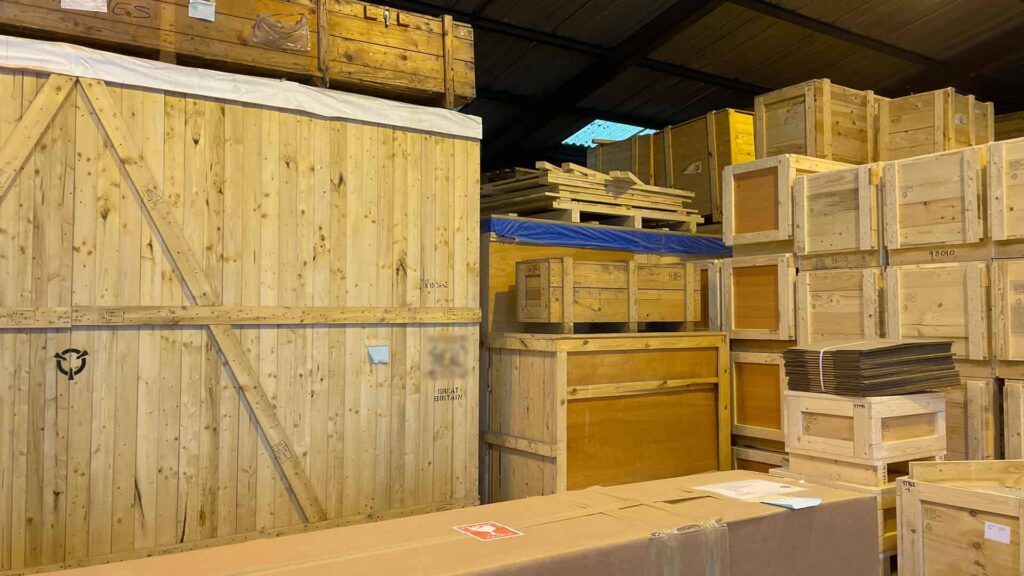
Standardized packaging is another crucial factor. Particleboard intended for export must be properly palletized and protected against moisture and warping; it must also possess sufficient structural integrity to withstand long-distance transport. Even the highest-quality particleboard can sustain damage during sea or land transit if not packaged correctly—a scenario that could lead to product returns or a decline in the supplier’s reputation.
Packaging and Shipping Conditions for Export-Grade Particleboard
Packaging for export-grade particleboard plays a crucial role in maintaining product quality until it reaches its destination. The sheets must be protected against moisture to prevent warping or surface indentations. Utilizing standard strapping and palletizing methods ensures the stability of the sheets during transit, thereby reducing the risk of mechanical damage. Furthermore, the packaging design must account for potential warping during long-distance transport, ensuring that the sheets reach the end customer free from deformation or damage.
Factors Affecting the Price of Export-Grade Particleboard
The price of export-grade particleboard depends on several key factors. The thickness and dimensions of the sheets directly influence the amount of raw material used and the product’s weight, thereby affecting the final price. The quality grade—including the uniformity of the core, the quality of the pressing process, and flexural strength—is another determinant of price. Furthermore, the export destination, transportation costs, tariffs, and customs regulations can all cause price variations. Finally, expenses related to shipping, standard packaging, and protective measures for the sheets also have a direct impact on the final cost. For a reliable purchase and a detailed review of pricing, you can visit the particleboard purchasing page on the SaccoWood website.


